Guides · English
Atlas Mountains Travel Guide: Practical Advice Before You Go
The High Atlas is about 65 km from Marrakech, but village life follows its own rhythm. This guide covers transport, language, customs, food, money and safety, written by a team based in Imlil.
How do you get around the Atlas Mountains?
The easiest way to reach the Atlas is a private transfer from Marrakech to Imlil, which takes about 1.5 hours for roughly 65 km. We arrange private transfers between Marrakech and Imlil as part of our trips.
You can also travel by shared grand taxi, which runs from Marrakech to the mountain villages, or by local bus, which is slower. Ask us if you prefer to arrive independently and we will explain where to go. From Marrakech Menara airport, it is a short ride into the city.
Plan to arrive in Marrakech a day early if you can, so that a late flight does not cut into your first walking day. Once in the mountains, you move on foot or by mule. Roads end at villages such as Imlil, and the paths beyond are for walkers and animals. Our Marrakech to Toubkal guide explains the route options in more detail.
Who lives in the Atlas villages?
The Atlas villages are home to Amazigh (Berber) families, who have farmed these valleys for generations. People grow walnuts, apples, barley and vegetables on terraced fields and keep goats and sheep.
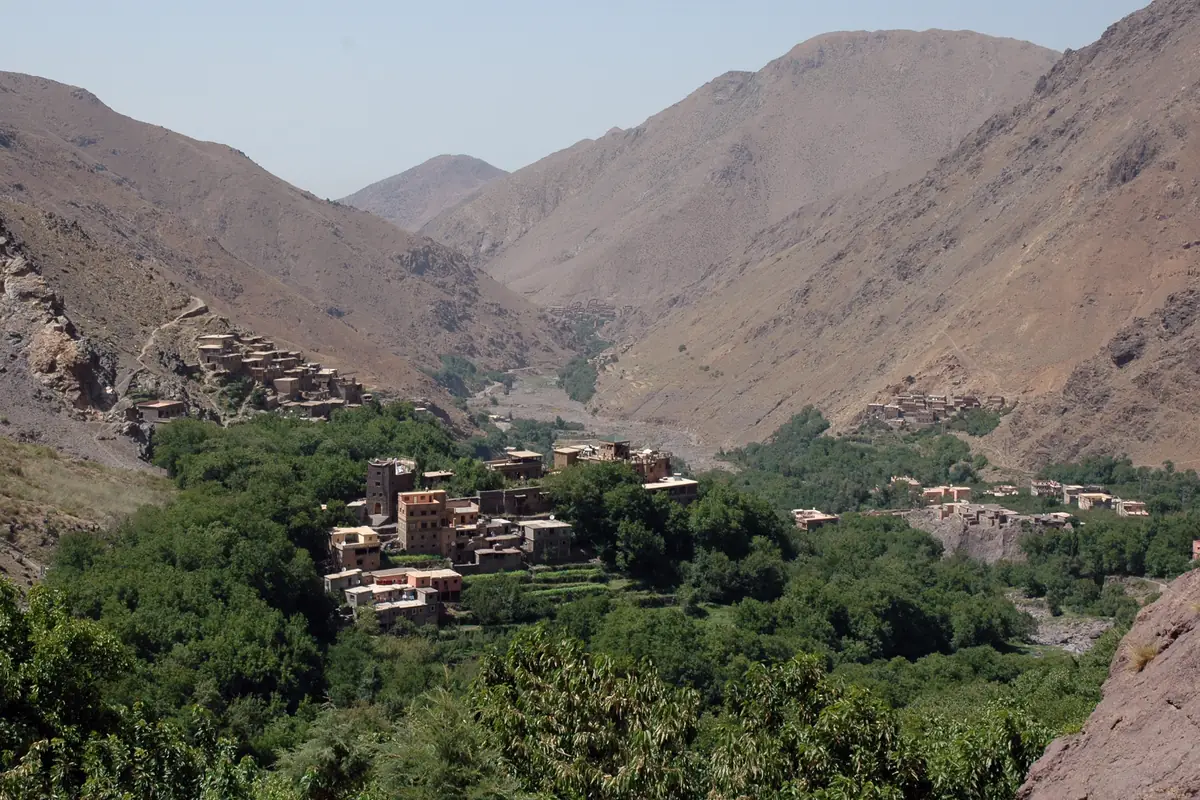
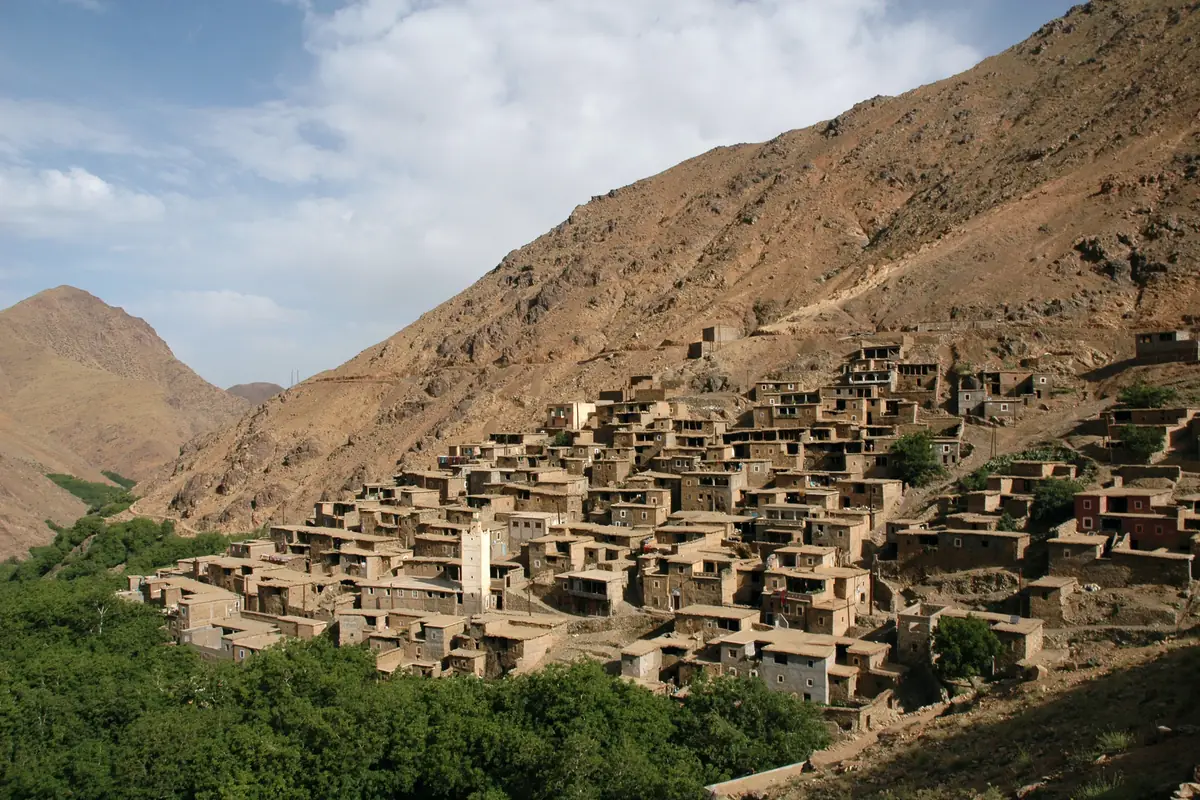
A village here is an ighrem fortified village. A fortified village or granary, built in stone and earth.: a cluster of stone and earth houses built on a slope. Houses are close together, which keeps the valley floor free for crops. Mules, not cars, carry loads between settlements, and many families welcome walkers for tea.
Guesthouses in the villages are often family-run, and staying in one is one of the best ways to see daily life. We include village guesthouses on several of our trips.
Greet people first, in any language you have. A handshake followed by a hand on the heart is a warm greeting, and walking slowly through a village, rather than rushing, is noticed and appreciated. Many families sell tea, bread or small goods to walkers, and buying a little is a simple way to support them.
Which languages are spoken in the Atlas?
People speak Tashelhit, Darija and French, and many in tourism also speak English. Tashelhit is the Amazigh language of the High Atlas. Darija is the Moroccan Arabic dialect used everywhere in the country, and French is common in business and signs.
A few words go a long way. "Salam" is hello, and "shukran" is thank you in Darija. In Tashelhit, many place names carry meaning: a tizi pass. A col or saddle between two valleys: Tizi n'Tamatert, Tizi Likemt. is a mountain pass, an asif river. A river or stream, and often the valley it runs through. a river, and an adrar mountain. A mountain, as in Adrar Adj near Aroumd. a mountain. Learning the words helps you read the map.
What customs should you respect?
Dress modestly, ask before photographing people, and follow your guide's lead in villages. Morocco is a Muslim country and mountain communities are conservative, so covered shoulders and knees are polite for everyone, in villages and at shrines.
Always ask before taking a photo of a person, and accept a no with a smile. Non-Muslims should not enter the shrine of Sidi Chamharouch, though you can walk past it and see it from the path.
If you travel during Ramadan, expect shorter opening hours and quieter days, as many people fast from dawn to sunset. Dates move each year, so check them. Eat and drink discreetly in villages during the day, and ask your guide for advice. Morocco keeps the same clock time for most of the year but moves it back an hour during Ramadan, so check the time on your phone if you have a connection to make.
What do you eat in the mountains?
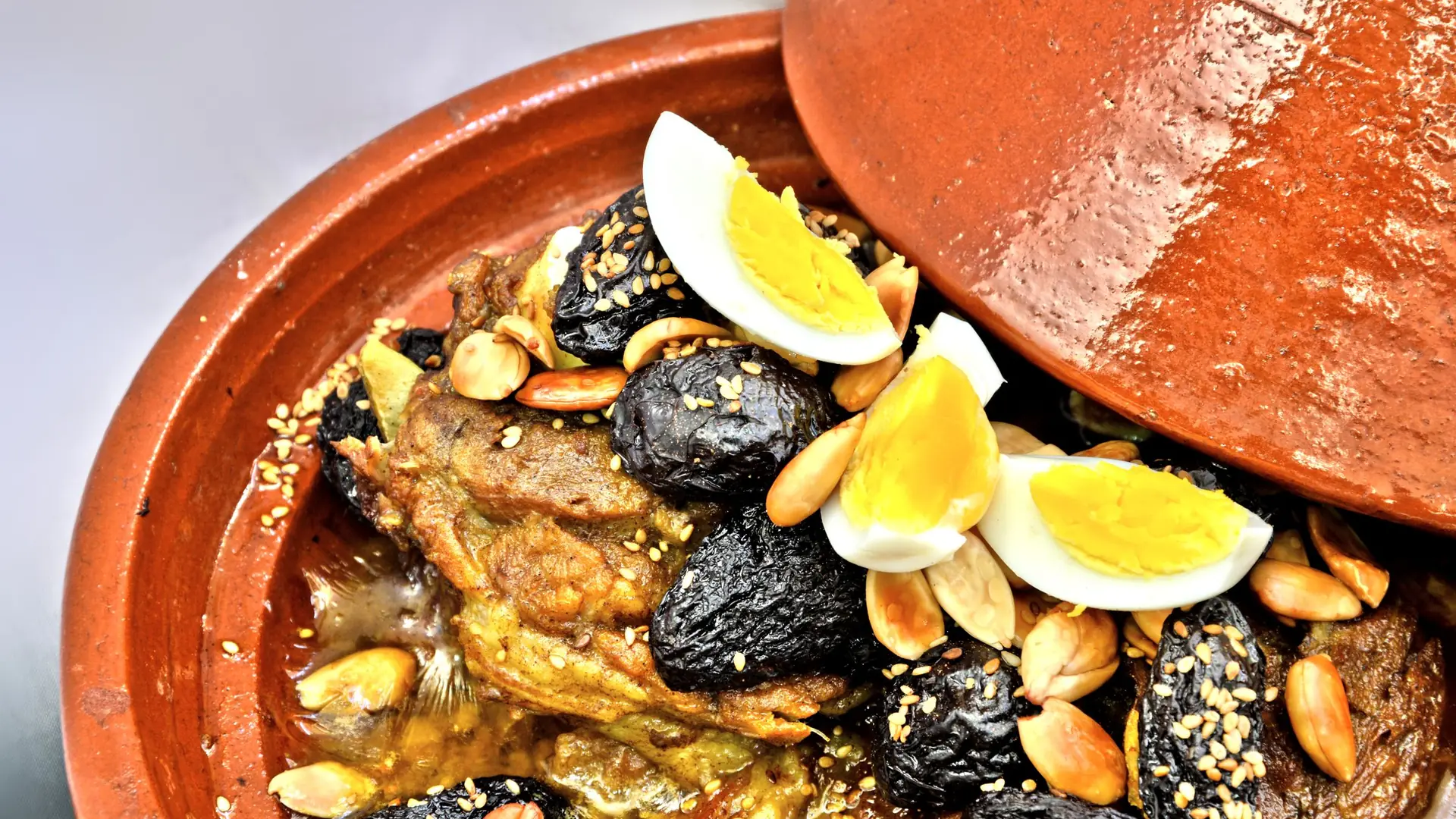
Expect tagine, couscous, soup, bread and mint tea. Meals in the mountains are simple and filling, built around vegetables, bread and sometimes meat, and prepared by the guesthouse or refuge.
Mint tea is the sign of welcome: it is offered at nearly every stop, and it is polite to accept at least one glass. Breakfast is usually bread, jam, eggs and tea or coffee. Each trek page states which meals are included.
Tell us about dietary needs when you book, including vegetarian or allergy requirements, so that the kitchen can plan. Tap water is not what we advise for drinking, so ask for bottled or treated water with meals. Bread, olives, fruit and nuts are easy to pack for a picnic lunch on a day walk.
How does money work?
The currency is the Moroccan dirham. Bring euros or cards, and change or withdraw money in Marrakech before you go to the mountains. Do not rely on a cash machine in Imlil or on the trail.
Carry small notes for tea, snacks, a mule handler or a small purchase in a village. We do not give set amounts for tips or extras on this page. If you wish to know what to budget, ask us when you book and we will tell you plainly. Keep your cash and passport in a zipped pocket, and split money between your day pack and main bag.
Is it safe, and what about water?
The Atlas is considered one of the safer areas for walking, especially with an experienced local guide. The main risks are the ones any mountain has: weather, tired legs and loose ground.
Check the forecast, start early, wear good boots and tell someone your plan. Mobile coverage can be patchy in the valleys, so agree a meeting point with your group and carry a charged phone. Drink bottled or treated water: carry purification tablets or a filter, and do not drink from streams. Travel insurance that covers trekking at altitude is advisable, and our planning guide explains what to look for.
What can you do in a day around Imlil?
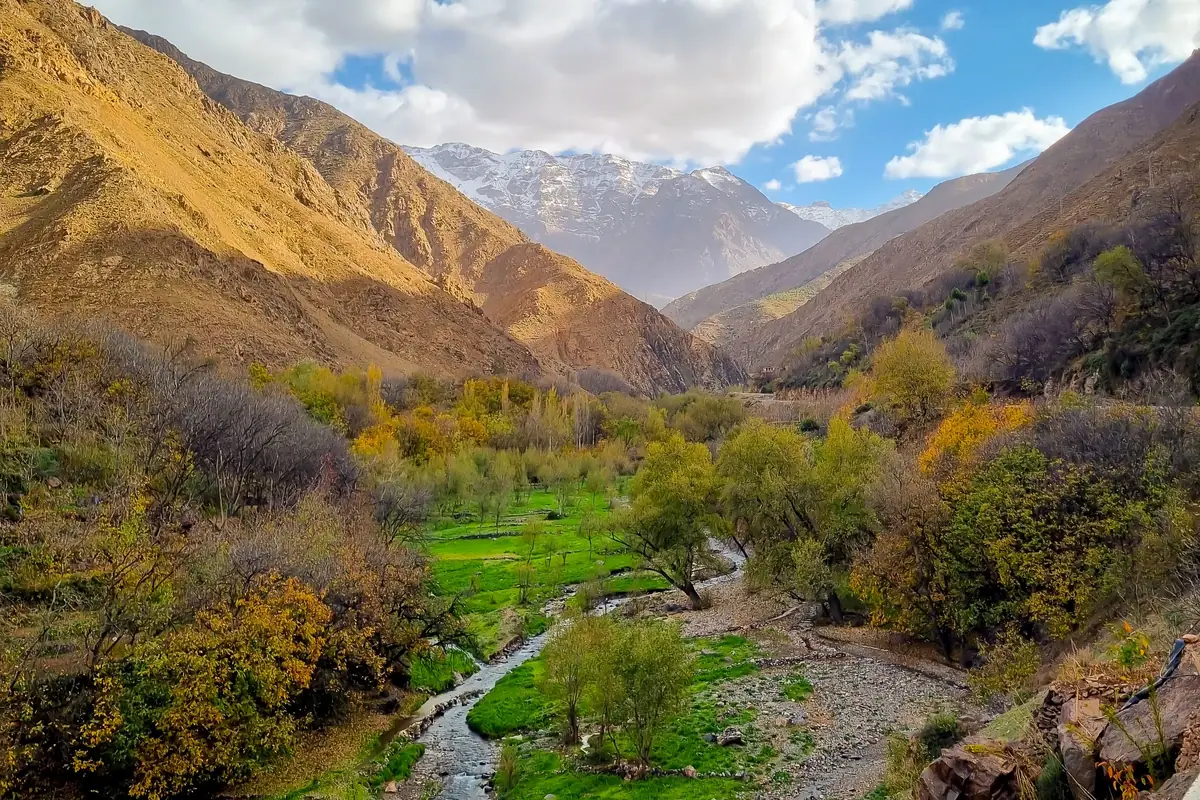
You can spend a day walking from Imlil through nearby villages, walnut groves and terraces, with tea in a family home. It is a walk and not a summit day, so suits all levels and families.
Our Imlil village day trip from Marrakech follows this idea, and there is time to see how village life works. If you stay in Imlil, a short walk to the nearby hamlets gives a good first look. Start in the morning, when the light is soft and the paths are quiet. Wear walking shoes or light boots, carry water and a layer, and keep the pace relaxed, since the point is to look around and talk to people.
When is the Asni market?
Asni holds its weekly market on Saturdays. It lies on the road between Marrakech and Imlil, and is where many valley families shop for food, tools and animals.
If your trip falls on a Saturday, ask us about stopping on the way. It is lively and local, and a good place to buy fruit or nuts for the trail. Go early, keep your bag close and be ready to bargain with a smile. Market days are a good chance to see which crops and crafts the valley produces, and to taste fresh bread or fruit.
Questions
How do I get from Marrakech to Imlil?
By private transfer, which takes about 1.5 hours for about 65 km. Shared taxis and local buses also run. We arrange transfers as part of our trips.
Which languages should I know?
English and French are enough in tourism. Learning a few words of Darija or Tashelhit is appreciated in villages.
What should I wear in the villages?
Cover shoulders and knees. Light, long clothing is practical for sun and for local custom.
Is the tap water safe?
We advise bottled or treated water. Bring purification tablets or a small filter.
Do I need a cash machine in Imlil?
Do not count on one. Change or withdraw dirhams in Marrakech before you leave for the mountains.
What day is the Asni market?
Saturday. It is on the road from Marrakech to Imlil.