Guides · English
Best time to hike Mount Toubkal, for European hikers
Late spring and September are the easiest months for Toubkal, and winter needs crampons. This guide goes through each season and month, with school holidays, Ramadan and the summer heat in Marrakech.
When is the best time to hike Toubkal?
The best months are usually May, June and September, when the route is mostly free of snow and the weather is settled. You can climb Toubkal in every month, but the equipment and the effort change a great deal.
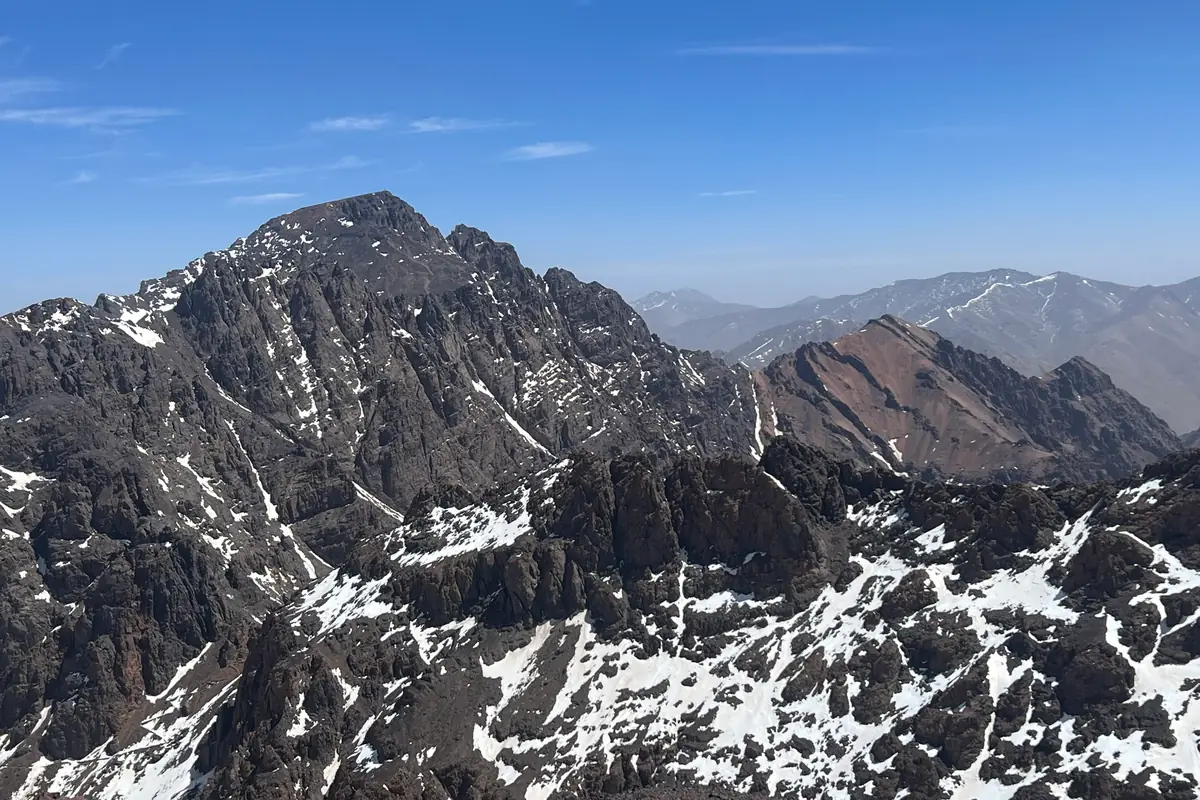
The mountain is high enough to hold snow for much of the year. Between roughly November and April the upper slopes are snow-covered, and a summit ascent becomes a winter ascent. From June to September the standard route is usually clear. These are general patterns, not forecasts: conditions change from year to year and week to week, and your guide makes the final call.
The table below summarises the year. Use it with the season notes that follow.
| Month | Conditions | Crampons |
|---|---|---|
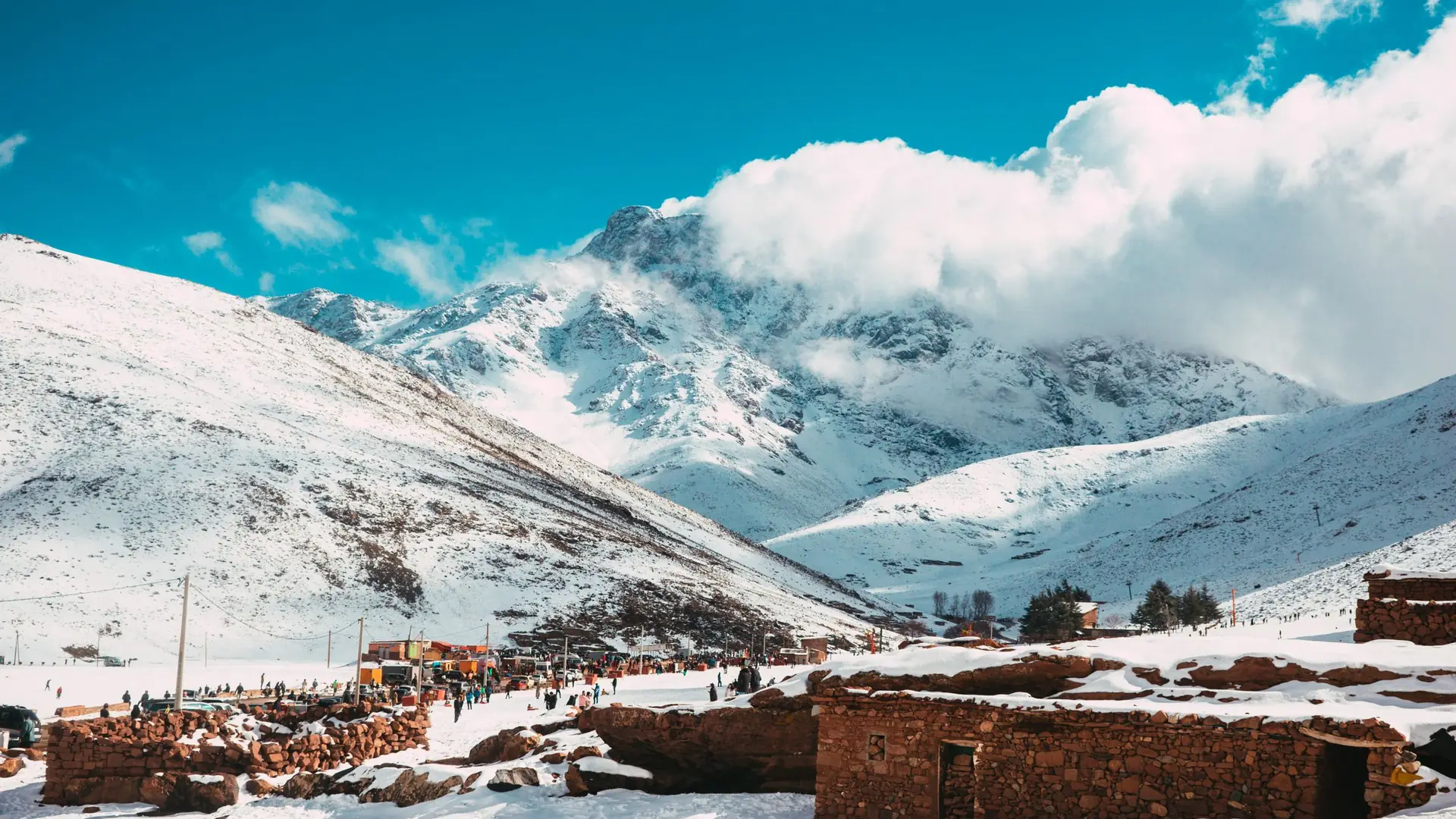
| January | Snow on the upper mountain, can reach villages | Yes |
| February | Deep winter, very cold nights | Yes |
| March | Longer days, still a snow climb | Yes |
| April | Snow on upper slopes, green valleys | Often |
| May | Mostly a walk, snow patches high up | Rarely |
| June | Usually free of snow | No |
| July | Dry, hot low down, odd afternoon storm | No |
| August | Dry trails, cold dawn on the summit | No |
| September | Settled and cooler | No |
| October | Cold nights, first snow possible | Rarely |
| November | First snows, changing week to week | Often |
| December | Winter above the refuge, short days | Yes |
Spring: March to May
Spring brings green valleys and snow on the upper mountain, so conditions improve through the season. In March the climb is still a snow climb and needs crampons and an ice axe.
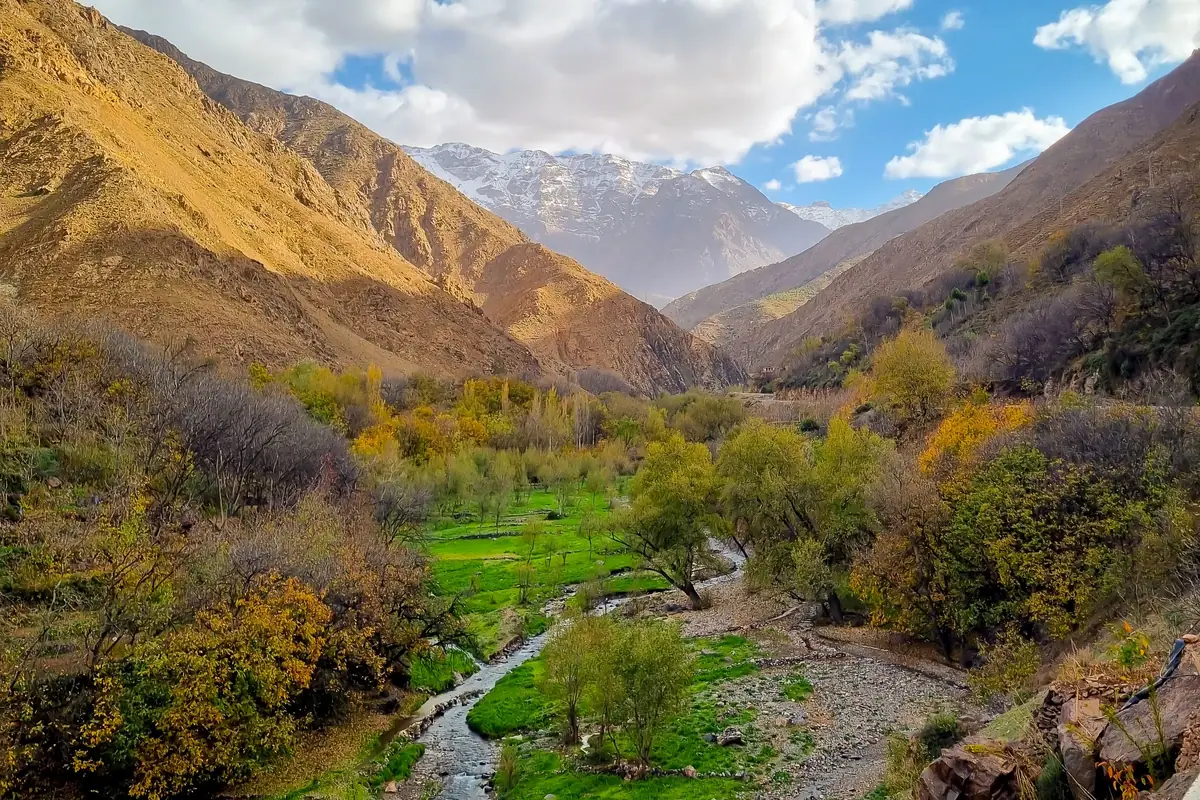
In April, snow lingers on the upper slopes while the valleys turn green, and crampons are often still needed, especially early in the month. By May it is mostly a walk again, with snow patches high up, flowing streams and mild days. May is one of the best months on the mountain.
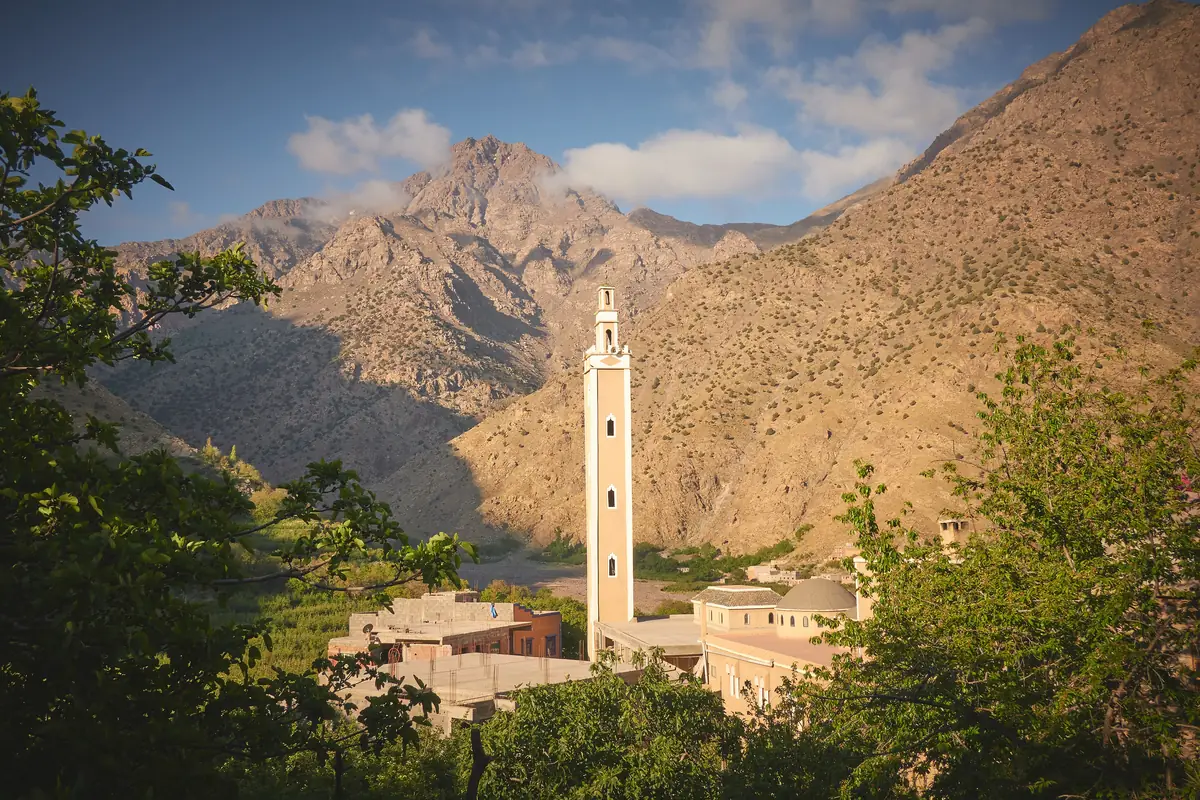
Spring is a good choice for the longer treks that cross valleys, such as our 6-day Toubkal trek via the Azzaden valley, because the terraces and streams are at their best.
Summer: June to August
Summer is the driest season, with no snow on the standard route and the longest days. It is also hot in the valleys and in Marrakech, and the summit is still cold at dawn.
June is warm in the valleys and cool at the refuge, and the route is usually clear of snow. July and August are dry, with very hot weather in Marrakech, so start walks early and carry more water. In the mountains, expect the occasional afternoon storm. Pack a warm layer and a waterproof even in midsummer.
The heat in Marrakech is worth planning for. Spend as little time in the city in the afternoon as you can, and keep your sightseeing for early morning or evening. The mountains are noticeably cooler, and our 3-day High Atlas hiking tour is a pleasant way to enjoy them in warm weather.
Autumn: September to November
September is one of the best months for walking and for the summit, with settled weather and cooler air. October is usually still a walk, with cold nights, and a first dusting of snow on the summit is possible late in the month.
November is a change point. The first real snows arrive and conditions vary from week to week, so crampons and an ice axe can be needed. If you book for November, expect to decide close to the date, after checking conditions with your guide.
Autumn is popular with European walkers because the flights are short and the weather suits them, so it is wise to book early.
Winter: December to February
Winter is possible but serious: snow covers the upper mountain, nights are very cold and the days are short. Crampons and an ice axe are needed, and your guide decides on the day.
On the other hand, clear, bright days are common between storms, and the mountain is quieter. Boots must be warm and suitable for crampons, and you need insulated layers and good gloves. Tell us when you book so we plan the right equipment. The 2-day trek is possible in winter but leaves little margin, so a 3 or 4-day trek is safer for the weather.
Our guide to the mountain, the Ultimate Mount Toubkal Guide, has more on winter ascents.
Which month suits which kind of walker?
First-timers at altitude do best in late spring or September, when the route is mostly clear and the weather is stable. Experienced winter walkers may prefer the snow months, with their cold clear days and quiet paths.
If you want green valleys and flowing water, choose May. If you want warm days and long daylight, choose June to August, and spend as little time in Marrakech as you can. If you want cooler air and clear light, choose September or October. If you like winter mountaineering, plan January to March with the right equipment.
Whatever month you pick, a longer trek helps with altitude. See the guide to trekking from Marrakech for the options.
School holidays and busy periods
Busy periods follow European school holidays, so book early if you travel at Easter, in summer or at Christmas and New Year. Holiday dates differ by country, so check your own calendar.
The refuge beds and the guesthouses fill up first. If your dates are fixed by school or work, send us a message early and we will confirm what is available. If your dates are flexible, a week either side of a holiday often means a quieter path.
For help with planning, see our planning guide.
Ramadan and travelling in Morocco
Ramadan moves about eleven days earlier each year, so check the dates for the year you travel. During the month, many people in Morocco fast during daylight, and opening hours and daily rhythms change.
You can still trek during Ramadan. In general terms, villages are quieter by day, some cafés and restaurants close or open late, and meals are shifted around sunset. Your guide and team may be fasting. Talk to us when you book so we plan the meals and the pace sensibly, and be considerate when eating or drinking in front of those who are fasting. Moroccan clocks run one hour ahead of Greenwich time for most of the year and level with it during Ramadan, so check the time difference for your dates.
How do you prepare for the weather on the day?
You prepare by packing for cold and for sun in the same bag, whatever the month. Toubkal mixes warm valleys with a cold summit, so layers matter more than any single heavy jacket.
Check the forecast for the mountain a few days ahead, but treat it as a guide, because conditions at height can differ from the valley. Your guide will talk to you the evening before summit day and make the call at the refuge. If you trek between November and April, be ready for a changed plan, and keep a spare day in your trip.
See the full packing list for the kit by season.
Questions
What is the best month for Toubkal?
May, June and September are usually the easiest, with mostly snow-free paths and settled weather. Each year differs, so we check conditions with you before the date.
Can you climb Toubkal in winter?
Yes, with crampons, an ice axe and a guide who decides on the day. It is a snow climb, so expect cold and short days.
Is it too hot in summer?
The valleys and Marrakech are hot, but the mountain is cooler, and the refuge nights are cold. Start early and carry more water.
When do I need crampons?
From roughly November to April, crampons are needed or often needed. In May and October they are rarely needed, and from June to September not at all.
Can I trek during Ramadan?
Yes. Ramadan dates change each year, so check the dates for your trip and talk to us about meals and pace.
When should I book?
As soon as your dates are fixed, especially for Easter, summer and the Christmas period.
Is October a good month?
October is usually still a walk, with cold nights, and the first snow on the summit is possible late in the month. It suits walkers who like cool, clear days.
Crampons are rarely needed, though your guide will check conditions before the summit day.