How do Toubkal and the Alps compare at a glance?
They are different kinds of trip: a short Atlas trek to a single summit, and a longer hut-to-hut route in the Alps. The table shows the main points, and the sections below explain them.
| Point | Toubkal | Classic Alpine hut trek |
|---|---|---|
| Highest point | 4,167 m | Depends on route |
| Skills in summer | None technical | Varies with route |
| Sleeping | Refuge or village guesthouse | Mountain huts |
| Good seasons | Spring, summer, autumn | Summer mostly |
| Getting there | Fly to Marrakech, 1.5 h by road | Train, car or flight |
The comparison is general. Individual Alpine routes differ a great deal, so check the route you have in mind.
The most useful way to read the table is as a set of trade-offs. The Atlas gives you a high summit in a short trip, with simple accommodation and a different culture. The Alps give you a long network of marked routes, with a dense system of huts and towns.
How do the heights and difficulty compare?
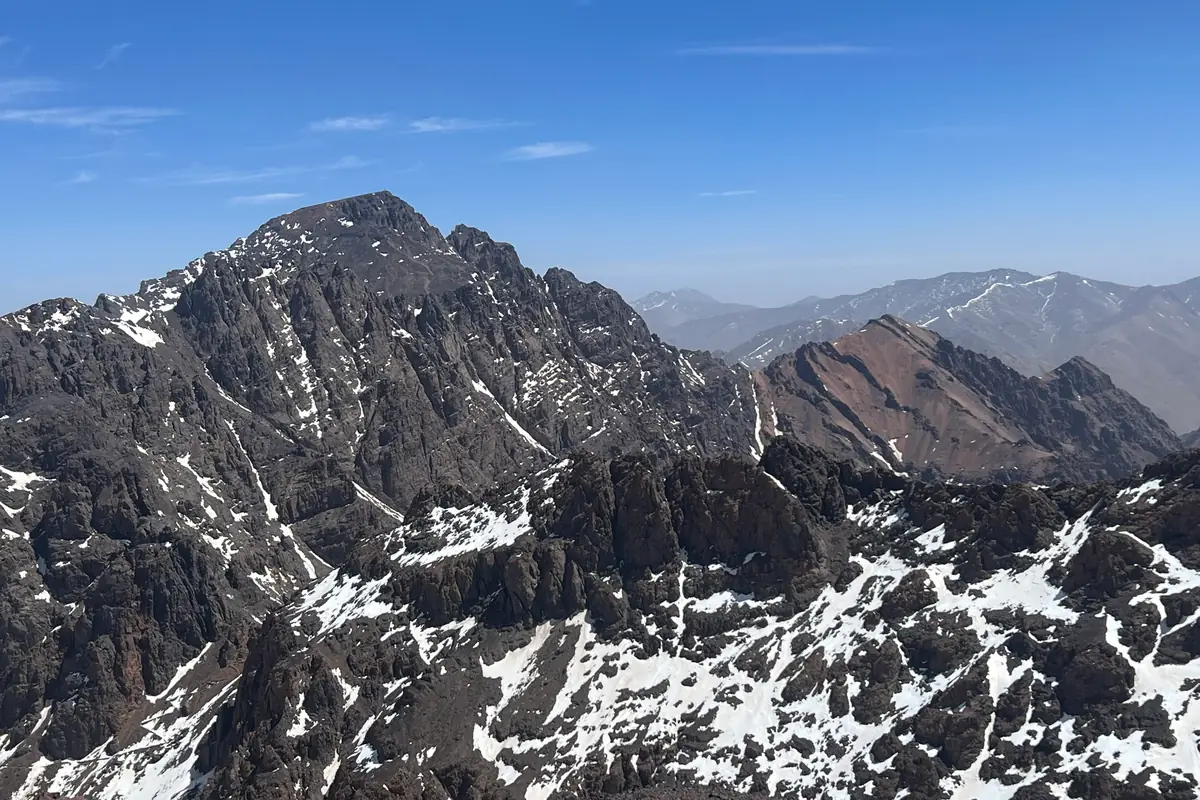
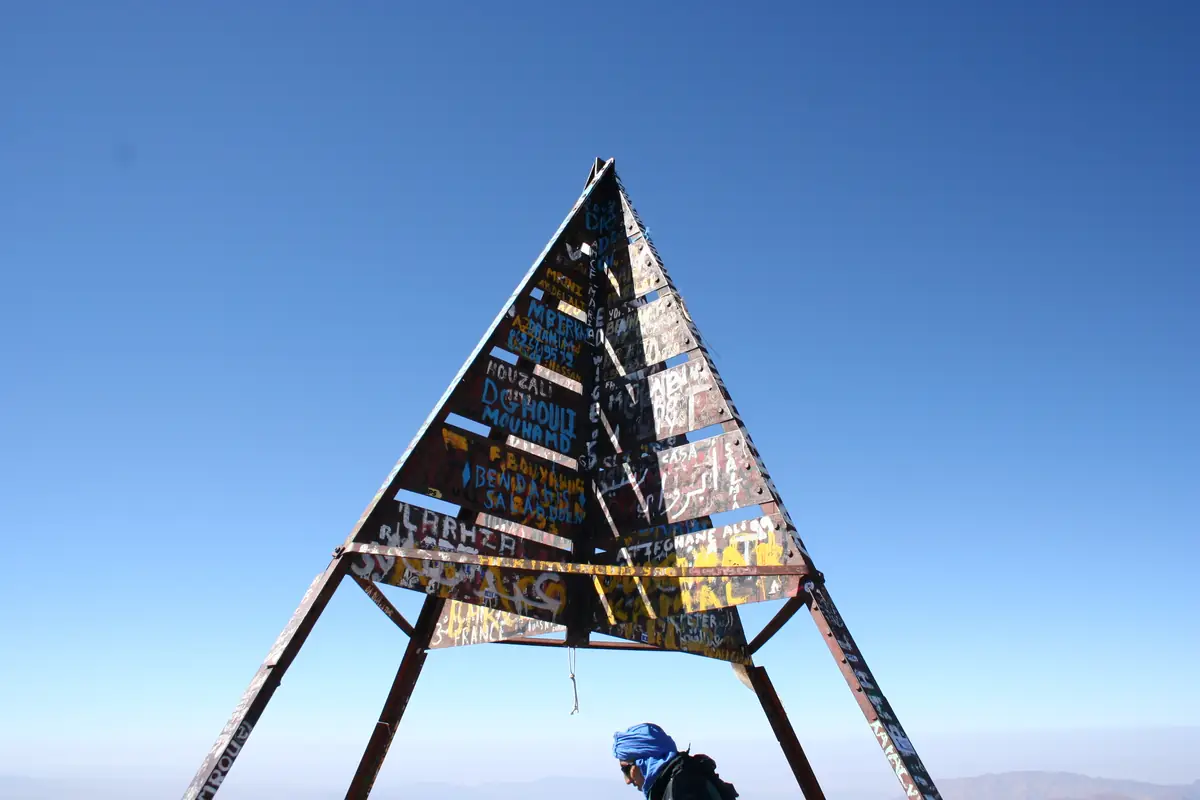
Mont Blanc is higher, at 4,806 m, but Toubkal at 4,167 m is a walk-up in summer, with no ropes or technical gear. That is the key difference: Toubkal is a high mountain you can reach on foot, with a guide, if you are fit.
Mont Blanc needs glacier travel and mountaineering experience, so the two do not compare as like for like. A better match for Toubkal is a classic hut trek such as the Tour du Mont Blanc, which is a long walk rather than a climb. Both need fitness and steady pacing.
If you have walked in the Alps, you will find the Toubkal path familiar: a rocky mule track, then a stony path with a steady gradient. The unfamiliar part is the altitude, because 4,167 m is higher than most Alpine walking routes go. Walk slowly, drink often and tell your guide at once if you feel unwell.
The summit day on Toubkal is long, and altitude affects people differently. Our Toubkal guide explains the routes and summit day, and the longer trips allow more time to acclimatise.
How do huts compare with refuges and guesthouses?
Alpine huts are set along a route and booked ahead, while on Toubkal you sleep at the refuge or in village guesthouses. The idea is similar, with shared dormitories and simple meals, but the Atlas adds family guesthouses in the valleys.
At 3,207 m, the Toubkal Refuge area has two refuges side by side: the Club Alpin Français refuge, known as Neltner, and the private Les Mouflons. They are shared mountain accommodation, much like an Alpine hut. Lower down, you may stay in a guesthouse in a village, with a meal cooked by the family.
Practical differences are small but worth knowing. You bring a sleeping bag or rent one in Imlil, you carry a head torch for the early start, and water treatment is advisable, as in many mountain places. Our packing list covers the details.
How do the seasons compare?
The Atlas has good walking in spring and autumn, when many Alpine huts are closed or the high routes hold snow. That is a real advantage for hikers who want a walking week in April, May, October or November.
In summer, the Alps are at their busiest, while Toubkal is warm in the valleys and cool at height. In winter, Toubkal carries snow and ice, and crampons and an ice axe may be needed, while Alpine winter hiking needs more specialist skills. Our month-by-month guide shows what each month brings.
Weather in the Atlas can be settled for long periods, though no mountain is guaranteed. We check conditions before each trip and adjust the plan. If you have a fixed holiday week, tell us the dates and we will say what to expect then.
How do the cultures differ?
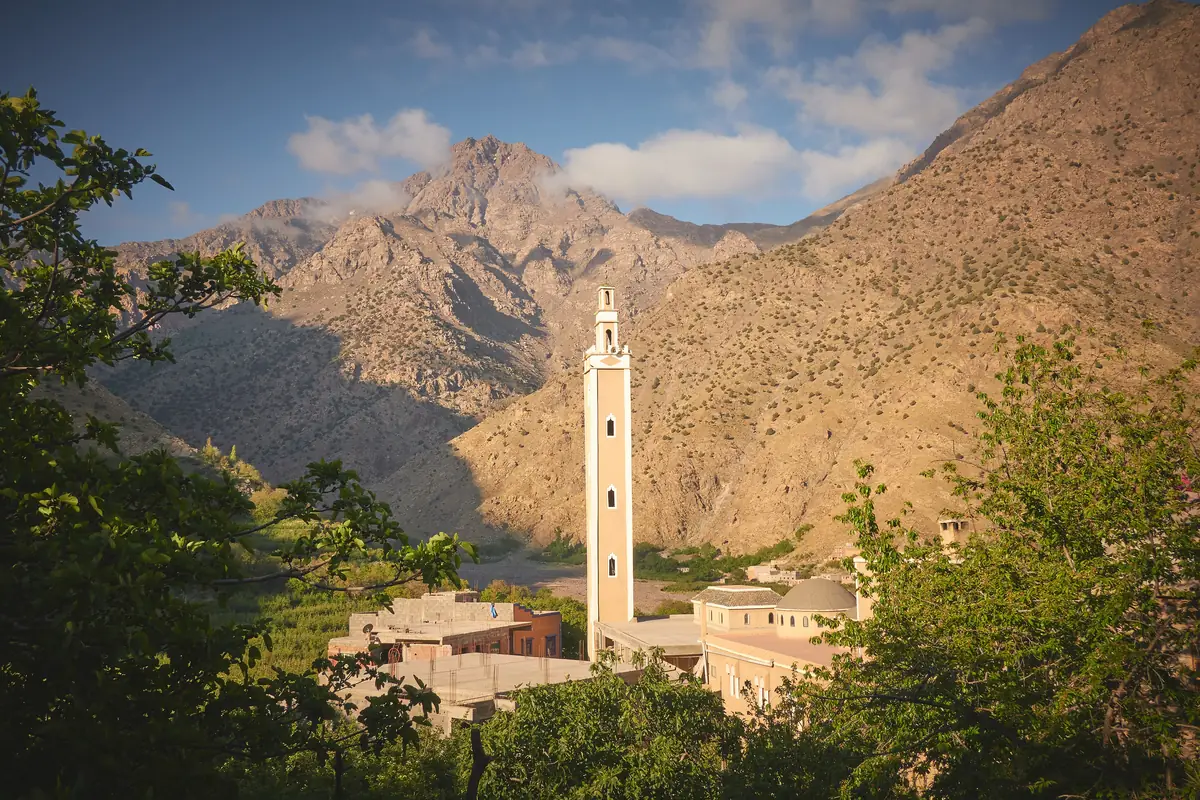
On Toubkal you walk through Amazigh (Berber) villages, where mules carry loads and mint tea is offered at the door. In the Alps, you walk among alpine farms and mountain towns with a long hiking tradition.
Neither is better, and the choice is a matter of taste. The Atlas is a different culture, a short flight from Europe, with a different language, food and rhythm. Many visitors add two nights in Marrakech before or after the trek, which makes a good contrast with the quiet of the mountains.
The pace of the day differs too. In the Alps, towns and cable cars are never far. In the Atlas you walk with a guide and mules, stop for tea in a house, and eat what the family or refuge has prepared. Both are good ways to spend a week in the mountains, and they feel quite different.
How do costs compare?
We cannot give a fair figure for the Alps here, so we suggest you price your Alpine trip first. Our Toubkal trips start from €170 per person for 2 days (based on 2 people; lower for larger groups).
When you compare, count everything: flights or travel, huts or guesthouses, meals, guides and transfers. Our trips include a guide, mules and transfers from Marrakech to Imlil; see each trek page for what is covered. Ask us if something is unclear.
Also count the time. A Toubkal trek can fit in a long weekend, because there is no long transfer by road or rail at either end. That can matter as much as the price when annual leave is limited. It also lets you try a high mountain before committing to a longer trip, and you can extend to a four-day or six-day route later if you enjoy it.
How do you get there?
Marrakech Menara airport is about 3 to 4 hours by air from the UK, France or Germany, and about 1.5 to 2 hours from Spain. From the airport, Imlil is about 65 km and 1.5 hours away by road.
You land, transfer and walk, with no mountain train or long drive. Our guide for UK travellers and Marrakech to Toubkal guide give the details. Check the entry rule for your passport before you travel. Many nationalities need no visa for stays up to 90 days, but the rule depends on your passport.
Which should you choose?
Choose Toubkal if you want a high summit without technical climbing, a different culture and good walking in spring or autumn, when the Atlas is at its most comfortable and Alpine huts are often closed. Choose the Alps if you prefer a long hut-to-hut route and a summer season.
Many walkers do both over the years. If you are unsure, contact us with your dates and experience, and we will tell you plainly whether Toubkal fits. A short call or message is enough to compare your fitness, dates and the kind of trip you want.
Questions
Is Toubkal easier than Mont Blanc?
Yes. Toubkal at 4,167 m is a non-technical walk-up in summer, while Mont Blanc at 4,806 m needs mountaineering skills and glacier travel.
Can I hike Toubkal in spring or autumn?
Yes. Both are good seasons, and snow may remain on the upper path in early spring. Your guide checks conditions.
How long does it take to fly to Marrakech?
About 3 to 4 hours from the UK, France or Germany, and about 1.5 to 2 hours from Spain.
Do I need to book huts in advance on Toubkal?
We arrange your refuge and guesthouse nights as part of the trip. Tell us your dates and we organise the rest.
What does a Toubkal trek cost?
Our 2-day trek starts from €170 per person, based on 2 people; lower for larger groups. See each trek page for what is included.