Guides · English
What to Pack for the Toubkal Trek
Split your kit in two: a small day pack you carry, and a main bag the mule carries to the refuge. Here is what goes where, and the ten things people forget.
What goes in your day pack?
Your day pack holds what you need between stops: water, a warm layer, a waterproof shell, sun protection, snacks, a head torch and personal items. Aim for a pack of about 20 to 30 litres, with a hip belt if you can.
Keep the things you may need quickly near the top. That means the shell, the warm jacket, gloves and a hat. Heavier items sit close to your back, which keeps the pack stable on the steep path above the shrine of Sidi Chamharouch.
Phone, power bank, medication and your passport go in a zipped pocket. On the summit day you carry a little more: extra layers, more water and any snacks for the long walk.
Pack the bag the evening before and check it in daylight. Walk around the room with it on, adjust the straps so the weight rests on your hips, and take out anything you doubt you will use. A day pack that feels a little too light at home is usually right for the mountain. You can always borrow a layer from the mule bag in the evening, but you cannot fetch one in the middle of the day.
Ticks are saved in this browser only.
What does the mule carry?
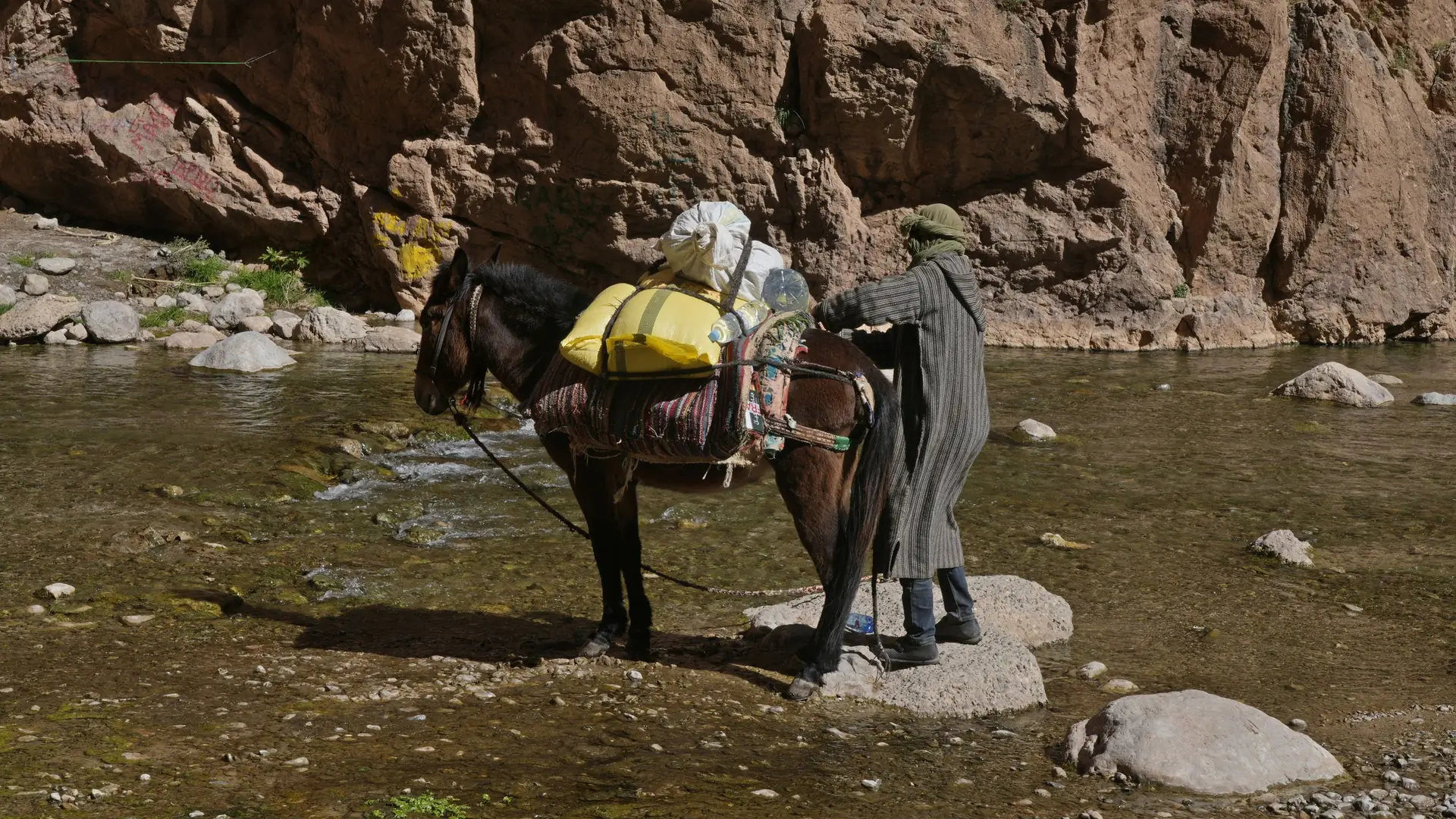
The mule carries your main bag with the things you only need at the refuge or the guesthouse: spare clothes, sleeping bag, toiletries and warm layers for the evening. Mules are part of how our trips work, and they take the load of the climb to the refuge at 3,207 m.
Use a soft duffel or rucksack, not a hard case, and close it well. Put anything fragile or important in your day pack instead. Mules sometimes rub against rocks, and a bag may get dusty or damp.
Line the bag with a strong plastic liner so that your sleeping bag and spare clothes stay dry if it rains. Label the bag with your name, so it is easy to find when the mules are unloaded at the refuge or guesthouse.
What the mule carries does not reach you during the day, so do not pack your rain jacket in it. A good rule: if you would be unhappy to be without it for six hours, it goes in your day pack.
What is the weight limit for the main bag?
Ask us. We do not publish a figure on this page, because the right limit depends on your trip, the season and the number of mules. Tell us your dates and itinerary and we will give you a clear answer.
As a general principle, pack lighter than you think you need. You will wear the same two or three layers for most of the trip, and clothes you do not use are weight for the mule and a hassle for you. A quick pack-and-lift test at home shows you whether your bag is too heavy.
What clothing do you need?
You need a base layer, a fleece or light down jacket, a waterproof shell, trekking trousers, a warm hat, gloves and sun protection. These layers cover the warm valley and the cold refuge nights in any season.
Avoid cotton. It dries slowly and chills you when you stop. Wear boots that you have already broken in, with two or three pairs of hiking socks, and bring light shoes for the evening.
In winter, add a down jacket, thicker gloves and gaiters, and expect to rent crampons and an ice axe in Imlil if your guide advises them. Our full packing list goes through winter and summer in more detail.
What do you need at the refuge?
At the refuge you need a sleeping bag, a liner, ear plugs, a head torch and a small towel. The refuge is a shared dormitory, so nights are communal, and the summit start is in the dark.
You can rent a sleeping bag in Imlil. A liner is worth bringing from home, since it is light and adds warmth. Dinner and breakfast are part of the trip, as stated on each trek page.
The refuge is simple, so bring light shoes, a warm layer for the evening and a bag for your wet things. Keep your head torch, water and next morning's layers close to your bunk, so you can find them in the dark without waking others. The summit start is early, and it helps to have everything laid out the night before. If you are unsure what to leave in the main bag, ask us and we will go through your list.
Ten things people forget
- A head torch with spare batteries, for the pre-dawn summit start.
- Sun cream and lip balm with sun protection.
- Ear plugs for the shared dormitory.
- A sleeping bag liner.
- Cash in dirhams, since there is no reliable cash machine on the mountain.
- Water purification tablets or a small filter.
- Blister plasters and any personal medication.
- A warm hat and gloves, even in summer.
- A plastic bag for wet or dirty clothes.
- A copy of your passport and insurance details.
Most of these weigh almost nothing. Put them in a small pouch inside your day pack so that they are packed once and not forgotten.
What should you leave behind?
Leave cotton clothing, heavy suitcases, valuables and anything you do not need on the mountain. You can store items you do not need in Marrakech or at your guesthouse before you set off.
If you are unsure about an item, ask. Said and the team help guests with equipment advice before the trip. Contact us with your dates and we will tell you what to bring.
Questions
How big should my day pack be?
About 20 to 30 litres is enough for most people. It needs room for water, layers, snacks and a head torch, and should sit comfortably on your back for a full day of walking.
What is the weight limit for the mule bag?
Ask us. We give the limit when you book, because it depends on your trip and season. Pack light and use a soft bag.
Can I rent gear in Imlil?
Yes. Sleeping bags, crampons, ice axes, warm jackets, trekking poles and backpacks can be rented in Imlil. Tell us in advance so that your sizes are ready.
Do I need a sleeping bag at the refuge?
Yes, you need one, but you can rent it in Imlil. A liner from home keeps it clean and adds warmth.
Is there a longer packing guide?
Yes. Our full packing list has an interactive checklist by season.